

While we did not enter the competition with our students this year we wanted to take the opportunity to congratulate all of this years winners on their achievements.
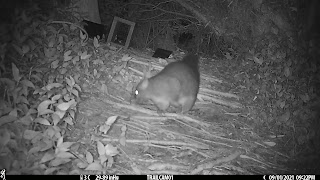
This brush tailed possum was photographed last night interacting with the lure.
While we did not enter the competition with our students this year we wanted to take the opportunity to congratulate all of this years winners on their achievements.
This brush tailed possum was photographed last night interacting with the lure.


Thanks to staff from Lincoln University, they have supplied us with an audio track of a captive possum, which has come from Jenny Dent from Zero Invasive Predators.

At deployment site one at present we believe we have significantly reduced the number of possums in the riparian planting area where we are currently trapping. Since we started the latest phase of testing (Sunday 24th of October) in the initial period of trapping we were experiencing up to twenty seperate activations in a night and documenting up to six unique possum visits to the sound lure area. Following this we removed a series of possums (five) as well as had the trap sprung on two other occasions where an animal was able to escape.
In the last week we are still seeing regular visits but they are singular and the possums have not been interacting with the lure or trap. However we see clear value in using the 'distressed' version of the lure at this location to see what affect that it will have on this site. There is still one adult male possum investigating the site and exploring around, although he appears to be trap shy.
We intend a significant deployment and recording process having replaced the confident possum sounds with the distressed possum sounds. The images with the post are from trail cameras used in conjunction with this sound lure project in South Taranaki.
This will be the final post in this series for the foreseeable future - again if we look at the focus question that we were looking at over the last few weeks, was the sound lure repelling or acting as a deterrent to the target pest animals.
Night after night during the past month we have seen the same activity over and over again, the animals are coming into the area and interacting with the lure, the bait and the Timms trap and we have had repeated captures and activations. Last night we saw a repeat of this - we saw three distinct visits during the evening, so slightly down on pervious evenings.
However during each series of interactions we saw the repetition that we have experienced repeatedly. The lure operates and the animals show interest. We had a initial visit from a male from 10:50pm until 11:00pm, a second series of visits from another male at 1:19am and a final set of visits at 1:35am.
The final visit at 1:37am saw the brush tailed possum activate the Timms trap, however instead of being trapped the animal was able to remove itself from the trap and escape. The animal did not return after this point.
The video that is contained the above includes some of the selective highlights of the activities during the evening. Again it is part of a major data recording of a number of visits and the purpose of the video is simply to illustrate what is occurring when the unit activates and there is a possum near or next to the unit and how is the animal reacting to the noise that is coming out via the lure and the trap.
Last night, Friday 19th November, we placed a Timms trap at deployment location one with the sound lure, in addition to having it monitored by a trail camera. After a series of strikes in this area we believed that the site was settling down on account of their being less activity since we removed the sound lure. We had replaced it in location the previous night but had no activity.
The value of the recording at the site showed us what was happening also more crucially the interaction between the components. Please note that we have been censoring some of the footage that we have been recording at this site due to its nature, including the capture of the animal and some of the possum activity that is clearly directed at animals that are deceased inside the trap.
A summary of the activity at the site saw the first brush tailed possum arrive on site at 9:23pm. It entered the trap but did not set it off at 9:26pm and 9:30pm (that is in reached into the trap and removed part of the apple inside it). The sound lure was operating during this time, including twice when clearly in video the noise activates, but the animal did not stop its activity. The capture of the female occurred at 9:34pm.
There were post capture visits by other possums at 9:46pm, when the unit also activated - the second possum left the site when this occurred, but returned two minutes later. A male appeared at the site at 11:50pm and left shortly after. Another male arrived at 2:19am and was present when the lure activated. A seperate male arrived at 3:31am and left immediately afterwards when the unit activated, clearly spoked or disturbed by the unit.
In total during the night there were clearly five seperate visits at this site with twenty camera recorded activations in total. There was no evidence of any post capture activity as we have witnessed previously. If we generally summarise the evidence of the noise and whether it is acting as a deterrent (as it has been suggested and as we have been investigating for the past few weeks) that there was one case of aversion at 3:31am (the final male on site was in process of tipping over the Timms trap when it activated) but otherwise the other five possums at the site showed interest but did not leave the site or flee when the unit activated, and if they did (in the other case) they returned immediately to the site.
Also of note this activity is occurring in a riparian planting area next to a local river in a small stand of tree's. It is accessed to the rear of the property owned by the person who is running these trials - it is not taking place in densely wooded areas or in remote bush areas, so the level of the possum activity at this location is a surprise.
Finally I had a request of the best way to contact myself with regards to the site - this would be via email at myles.webb@gmail.com
The current phase of testing can be summarised as follows:

Sunday 31st October- Thursday 4th November - Sound lure operating making a range (five) of brush tailed possum sounds playing at a one minute interval. Significant activity in the area including repeated interaction/return visits to the site and trap station area with lure operating. Some evidence of animals leaving the area at speed but based on the time stamps and basic animal identification these animals returned shortly afterwards. Animals present included a mother and baby and several adult males all of whom remained on site for extended periods of time.
Friday 5th November - Wednesday 10th November - pest removal phase during a five night period four brush tail possums were removed at the location. There was a fifth activation where there was clear evidence of a possum having sprung the trap but managed to avoid being caught. Due to technical errors with the trail camera last recordings took place on Thursday 4th November (moisture) however still photos taken the following morning. The morning of the 10th the lure was operating but there was no evidence of interaction and the bait was not removed.
Thursday 11th November - Saturday 13th November - We left the Timms trap at the site but removed the sound lure due to the weather conditions and to see what would be happening. The trap was baited with apple (as it had been since Friday 5th). During this period there were no activations at the trap location or evidence of the bait being taken, and the site remained static.
Sunday 14th November - Overnight we replaced the sound lure for the first time in three nights (which had the same apple bait since the 10th). When we observed the site the following morning the trap had been sprung, the apple had been pulled from the trap and had been significantly eaten. As there was no camera monitoring the site (as there hasn't been since the 4th) there was no direct evidence of what had occurred but it seemed clear that a possum had been in the area.
The stoat box, with salted rabbit meat has been static the entire time. We now have in our possession cameras in which we will be able to use to monitor the site and record footage of what is occurring and we indeed intend to at the first available opportunity (ie weather permitting).
I feel compelled at this time to again issue a disclaimer about this testing. This phase of testing is being conducted at a single site a short distance from a location where I live. It is not intended to be scientific with comprehension proof of what is happening it is merely a record of what is occurring at the moment and I am well aware the variables that are being used are very basic (and there is no alternative). It is very much conducted by a non scientific teacher in spare time. If you would like to conduct testing using the equipment an the sound lure we have units available for use, please get in contact with myself via the blog.

It has been five nights since the modified trap was placed in the location, replacing previous lures that were used to monitor the level of possum activity in the area.
The five tracks currently in use and all generic possum sounds, played at one minute intervals by the solar powered sound lure which has been operating with its technical components outside for two years. We have now caught three males and a female at this location since Friday.

Again we have seen evidence of this repeatedly during the monitoring of the sites where we have had captures of an animal and then additional animals have arrived at the site to attack the dead animal, which we have seen both in possums and rats.
The sound lure has continued to operate after the capture of the animal and continue to generate a sound profile with the potential to bring other animals into the area. There is the possibility of combining the trap with a self setting device to look at seeing if multiple animals could potentially be trapped.

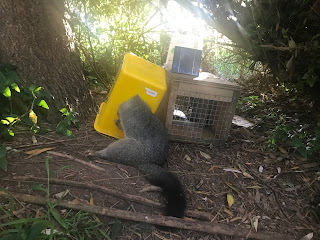
This site shows the unit which was pulled from the ground during the capture, the sound lure is under the plastic container which is on the top of the stoat box (which has still not had a strike in a month).
There was no evidence of interference with the possum after it was caught and the bait from the trapping was still visible inside the trap. All other details about the capture such as the programme (coding) and unit details are correct and similar to other posts in this series from this week. Weather has remained fine during this period. This is currently the most successful run at this location over the past two years, although we have successfully used a range of traps at this location.