Thursday, 16 March 2023

Stoat Focus For 2023: Unit Evaluation Three Months On...

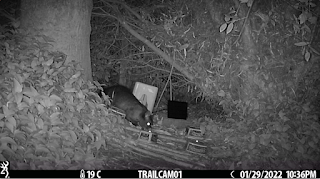
At the end of 2022 we started a long term deployment of units located at a area of trapping protecting a coastal area in South Taranaki.

The area has a considerable existing network and is having recorded captures in the past of stoats, hedgehogs, rats and feral cats.

In December 2022 we placed four units in an extension of this area.   The purpose of deploying the units was to again test the viability and reliability of the units during a long term deployment.   Once this deployment is completed we will spend time evaluating the effectiveness of the units and comparing this years data against the significant amount of historical data that is available.  

Of particular interest in this environment is the units being exposed to conditions that are coastal and the effect that it potentially would have on the effectiveness of the units.

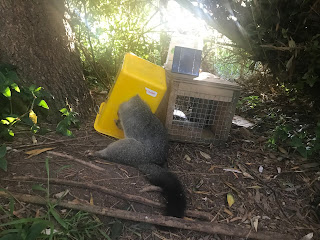
As of March 2023 the units have now been deployed for just shy of three months.   The four units were placed inside three DOC 200s and a fourth was placed inside a rat box, as it was placed next to a larger cat trap where it could not be mounted.

All of the units are cycling through a two minutes delay have a regulation set up and battery save coded and are using the regulation batteries.        Three months into the trial the units are continuing to operate independently (that is they are still operating exactly as expected) and have done so without being altered or redeployed.   This is despite extremely wet weather with considerable rainfall.

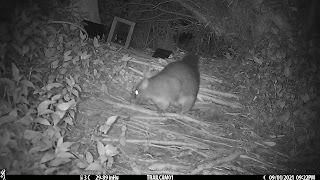
We also have anecdotal evidence of increased feral cat presence at one of the trapping sites.   While we are not at a position to make comparisons of data at this point, this is obviously potentially encouraging and would fall in line with some of our earlier findings at different locations (where when cameras have been deployed we have clearly seen feral [and domestic] cats showing an interest in the units/sound.

Tuesday, 20 December 2022

Stoat Focus for 2023: Deployment in the Field at Sandy Bay


After several months break we have just started with a deployment at a location in South Taranaki.  We have deployed the first phase of a number of testing units at a location just outside of Opunake.

The location is part of an actively monitored trap line protecting an area of sand dune/beach that is an expansion of an existing monitored location.   It is the intention to use the DOC 200/DOC 250 at the locations to test the viability of the units.

To briefly explain the deployment - the units have been placed within existing DOC 200 units, with the sound lure mounted externally.  We have returned to using some of the original sounds that have been developed, although we have modified the sound level coming from them to ensure that the sound is not so loud (in particular we have significantly reduced the 'distressed rabbit' noise in both volume and frequency, although we intend to look at developing these further.   

The units have just gone in yesterday and we will start to look at how they are preforming over the next few weeks - although this is intended to be a long term project.   There are currently no 'motors' attached to any devices at this location, as it is close to a beach we want to protect the motors before they are deployed.

There will be further information and update about this site and deployment shortly. 


Tuesday, 27 September 2022

Evaluating the Main Unit - Three Years On


Three years ago for this project we created an initial group of five trial units.  These units were intended to test the concept but also served the purpose of seeing if we could remain water tight (assuming there would always be some moisture entering the units) and if the unit would continue to operate with the battery and the set up.

Of the initial five units we have deliberately kept one remaining in its original state including having the original solar panel and battery.

Three years later the unit is still operating and still activating every minute or so when fully charged.  Although the solar panel is battered it is still operating and able to charge the unit.   The cellphone battery that is charged via the panel is still operating and working as intended.   The original electronics are more or less intact.

We would remain confident that this unit as deployed in its updated state could be operating in external conditions and would do so correctly and without the need for maintenance or updating etc.

2022 Project: New Focus on Stoats

Please note: This project needs to be put in the context of the work that has already been completed from 2019-2022.  This was a project started with students who were Y5/6 at the time, using technology to develop a suitable sound lure to target invasive pest species in South Taranaki, predominantly Stoats.   During 2020 a pivot was made towards possums.  I would like to acknowledge the work of Andrew Hornblow from Opunake and the funding and support of Curious Minds, Taranaki, both of whom this project would not have started, nor would it have continued.   This is not a scientific project as such this is practical project targeted at using technology to assist the removal of pests species, on a budget.

2022 Season - Targeting Stoats once Again

Having experimented using sound during the last three years to target first stoats and then possums we finished last year having a reflective think about next steps that we might use.

Questions were raised about how effective the sound was, in particular if the sound was acting a deterrent to animals who might otherwise investigate the trap.   We were able to show evidence that possums in particular seemed to want to investigate, as various footage posted on this blog shows, while other testing indicated that this was not the case.

We were keen to experiment with a range of sounds and also using a motor attached to the sound unit to see if the noise and movement created by a small motor would be enough to encourage interaction.

The set up for this new variation is shown left.  Familiar viewers of this blog or project will recognise that the unit has remained the same, and it is the same hardware set up, the only addition has been two additional terminals on the outside of the unit which connect to two sets of wires which then subsequently power the motor.

For testing purposes the motor will be powered to go off at random intervals.  It will rotate during this time, spinning both of the plastic gears that are visible.  Once the unit has played once it will rest and then operate again.   With optimal batter charge from the solar powered unit we would expect the unit to operate once every minute.   The lures are being placed adjacent and into a DOC 200 stoat trap.   This will allow the sound to echo from inside the unit and for the unit to vibrate slightly.   We are going to remove the speakers to the unit for the initial trial so the only sound generated by the units operation will come from the grinding of the gears and the unit operating.   We intend combining this with appropriate sounds at some point however at this time we are disabling the speakers so that the length of the motors moving is related to the length of the (silent) audio track.  This has introduced some variability to the units operations (as the audio tracks are all different lengths).

Having run basic trials in and around our school of this set up the movement based aspect of the units can be further enhanced to adding length to the motor gear (in this instance is involving a green pipe cleaner as a basic test).

Our initial goal in the next two weeks is to run several of these units in existing stoat trapping projects.  We want to determine how the unit will operate during deployment conditions, how this will compare to the traditional units (mechanical) that are part of the projects or run.

While the unit as shown on the left may look complicated we have in the past put together the unit with a group of students who are at Year 5/Year 6 level (under supervision) these units are operating as intended correctly.    

We are also for this purpose converting units that have been used with just audio so we have not had to create a group of units from scratch which would be both time consuming and relatively expensive (again we have managed to ensure that the price of the units has remained in the region of $50.00 total.

We are very much interested in having people test and experiment with any variation of this unit.  If you would like to do so, you are more than welcome to get in touch with the project by contacting the teacher who is in charge.  He can be emailed at: myles.webb@gmail.com.


We are limited with our time and money in this regard so please be aware of this - this is not a fully scientific project it is a project run as a 'passion project' by a pair of individuals and has students for the most part being responsible for its testing and its deployment.  We are more than willing to partner with others please take the time to get in contact with us.

We will again starting documenting the units development and adjustments on a semi-regular basis.

Sunday, 29 May 2022

Curious Minds: Final Project Video.

Last week our 2019-2022 Curious Minds Sound Lure Project wrapped up with a final presentation that took place at Puke Ariki Museum in New Plymouth.  We presented our final project overview and the project in its current form ended.   This video was produced to explain the project and to have some of the students talk about it.


We would like once again to thank everyone who has been involved in the project during the past three years, everyone who has contributed to our project, helped out with an aspect of it or helped in any way.  You have given the students and the project an invaluable experience.   As always if you need to contact the people responsible for this project you can do via email at myles.webb@gmail.com

Saturday, 23 April 2022

End of Project: Sound Lure [Focus on Stoats]


We are officially ending the sound lure project which began in 2019, later this month.   

The two main phases or focusses of the project involved using sound lures to target mustelids in South Taranaki creating a working, solar powered sound lure to do so.   

The 2019 project began with a focus from a group of school children working with adults hence the association with Auroa Primary School.   You can view the media/reports associated with this project by clicking on the link to this subpage linked on this blog.

This blog was used as a means of recording the project and using it as a base to share finding and information.   It became more of a working document and as the author the blog I felt that it was important to make some decisions about the project and resolve its future.

I have stressed from the outset and made clear that this project is very much a passion project that I am not nor have ever been a full time researcher or scientist.  I have been working with some amazing people (Andrew Hornblow from Opunake) for a number of years to give a group of students a powerful and authentic experience in learning.   Some of the information and research that I have created and produced needs to be put into this context and it is for others to assist with testing to ensure that it is authentic.  I have had my own experiences and evidence but I would rather put this to others to validate.

There have been some external organisations that I cannot say enough positive things about working with and helping develop the project and the technology develop further and it would not have been possible without the likes of Project Mounga, Feral Control, DOC and the Taranaki Regional Council.

April 2022: 
The material shown in the box is two lures, which have been used as part of the stoat network on Mt Taranaki which have been in place for a calendar year, which were returned in March 2022.   

There have also been deployments locally by a professional pest removal company in a trial funded by Fonterra and year long deployments at other significant locations including New Plymouth Airport which started in June 2020.

We had units deployed in McKenzie Country in the South Island which showed the unit could operate and continue to work in temperatures below freezing.

We have decided to wind this trial up as well and call in all units.    The project in 2020 very much spent time focussing on brush tailed possums as a result of the focus needed for the Curious Minds Project and the 123 Tech Challenge.  Ultimately this was the right decision because this project would have not continued for as long as it has without the support from the Curious Minds/Venture Taranaki funding and the students ultimately ended up being the New Zealand digital technology innovation champions.


I would like to acknowledge the support of DOC and Barry (who is responsible for monitoring the line) to allowing us the opportunity to test at this location.

The sound units in question have generally survived in conditions that include a full winter.   One of two units survived on the mountain and the third unit shown in the box is the sole surviving unit from the original five that were constructed in 2019.   It is still operating as intended, that is continuing to charge via solar power and continuing to operate with a clear audio call.   While we have had to change the external features several times (the speakers, the bolts connecting the units) the internal features of the unit have maintained its integrity - that is including the computer, the battery and the external wiring.  This has included having the unit deliberately exposed to the elements for three continuous years including two full winters.   The unit spent some of the first year inside a DOC 200 however it has also spent extended time wired to the back of a Timms trap and was at one point dragged into a river as part of a capture (by a possum).

There has been limited evidence of stoat captures when the unit has been in use.   
This has occurred at two seperate locations within short time frames followed by extended periods of non capture.  We have come to the conclusion that the units are too loud with their output and this has potentially been a deterrent to target species in the area.   Ideally we would like to have had clear evidence of successful strikes at multiple locations but this has not been the case.

Moving forward the project is not ending as such - although the funding has ceased and it is going to take place at a much slower, unofficial pace, unless there is a significant change.

Crucially while we are not being funded externally we have made progress and connections with professional organisations and we are attempting to arrange for professionals to determine an optimum sound range for the target species (stoats).   

Much of the material that was purchased for the project still remains and is working two years later.

We are going to redeploy a range of units locally using this new reduced noise range and also introduce a motor to each of the units.   The motor is going to introduce movement, with which we hope to draw attention to a mechanical trap that the unit will be placed in conjunction with.   We have already prototyped this idea and created units to run in conjunction with the motor and the sound, but again we consider the sound level at present too loud for the traps.

This deployment will begin in 2022 with a mind to targeting the stoat population in the spring of 2022.   We know that there is a clear stoat population locally however this population has been the target of extensive trapping and is cunning and avoiding many of the traps that are in place for them.    

To put this in context I know that there are stoats operating in my area where I live (I am living rurally in South Taranaki) I have personally seen a stoat prowling in the area within the last twelve months, as has my immediate neighbour (in an identical location months apart).   I also know there are Ferrets that are operating locally.   Consequently there has been a DOC 200 set with salted rabbit for over two years - and while there have been a number of strikes on this unit by large rats I have yet to catch a stoat.

It goes without saying that the frequency of these posts will lessen now the project has officially ended however I can always be contacted via this blog as required.  I also have the contact information for Andrew who has been an inspirational part of the project and responsible for the electronics.

It would be remiss of me if I did not end this post by thanking everyone that has contributed to this project in the past three years.  I would be mortified if I missed anyone out, however I would like to make sure that Andrew Hornblow, Tim Sojoberg in particular are thanks as without them the project would not have started.  I would like to also acknowledge anyone else who has helped, in the many different ways.  

While this may well be the end of the project I feel that something positive has been created as a result.  A working sound lure that is capable of being deployed long term has been made, tested and is viable.  That technology and resource is available to anyone who would like to use it.   

It has been a considerable amount of work at times, times when I have made the work in conjunction with my other full time responsibilities and there have been times when I feel I haven't been able to do the project justice - I also have been challenged at times by some of the full time professionals that I have been working with to approach it more from a scientific perspective but as I have mentioned I am not a scientist or someone who is able to devote themselves to the project on a full time basis.

Thank you to everyone who has visited this blog and whether we have been in contact or not I have appreciated the input direct or not.    Goodbye.

Tuesday, 22 February 2022

February Summary: LED Lights/Sound

The continuation of our monitoring at deployment site one has moved in February.    For the first part of the month, following our success in January, we decided to make some adjustments.   For the first half of the month we placed the trap in place, with the camera in position for the first week and removed the LED light and the sound lure.     This was partly due to weather conditions and partly to see what affect this would have on the activations.    

Initially the activations during February were down when compared to January.   The trap was activated on the 15th however there was not a possum when the trap was checked - it had been pulled out of the ground via the pins and the bait had been taken.   There was very little camera activations - we saw the 'dark male possum' frequently during the two weeks, continuing the behaviour that we have witnessed from it over the past few months it would appear on the site and act extremely cautiously - as it has been since last year when it was first sighted.   

The last time that a possum had been captured was January 16th and following that there was a noticeable decrease in the number of activations as detailed on this page.

On the 15th February the activation of the trap indicated that there were possums in the area and they were interacting with the trap.   This led to redeploying the sound lure with the LED light at the location (on the 19th), minus the camera as the weather was still dominated by rain and we are limiting our deployment (having a huge amount of footage of the possums/sound lure interaction the highlights of this are on this page).   

Two days after the redeployment of the sound lure/LED lights the night of 21st the trap was activated and a female possum was trapped, as shown in the photo.   This is the first capture at this location since mid January - interestingly this possum would be described as dark, very similar in colour to the male that is known to be in the area, however this possum was a small female.  Evidence at the site is that there at least one other possum as the bait that was in the trap had been significantly eaten following the capture.

Monday, 31 January 2022

January Summary: LED and Sound Lure in Combination


As the month comes to a close we can reflect on the month of recording results at deployment site one.

We have used a combination of LED lights and sound lure at the location and regularly recorded the activity using trail cameras.   Due to weather conditions and concerns about the viability of the cameras long term we have been reluctant to place the cameras out when we are aware that rain has been forecast.  We have maintained the traps during this time, including the sound lure to monitor activations.

At the sound lure/LED location we have seen interest shown in the LED lights and a combination of behaviour around the sound lure.   We have a month of HD footage showing interaction the highlights of which have been placed on this blog and on youtube.

Some basic background at the site - it is a riparian planting site close to a local river (which can be heard in the background when the camera is operating).    Previously we have operated a variety of traps at this location to measure the viability and note the interaction or otherwise between the possums and trap/lure.

At the sound lure location we had captures of possums on January 1st (when the new block of recording starting the previous night), January 4th and January 16th.   There were further activations on January 2nd and January 9th on these dates the trap was activated but no possum was trapped.     

There were 81 animals seen on camera, including three possums on one occasion.   In the first half of the month there was an average of 4.3 animals on view during the monitoring and 1.1 during the second half of the month (there is some doubt about the cameras being used effectively during this period due to the weather and the age of the cameras however the physical evidence based on the captures and activation is not in dispute.).

At the non sound lure location there were captures on 31st of December, 3rd of January and an activation on the 20th of January.

It is our intention to record data for an entire year at this location using a combination of the sound lure and LED lights.   The checks that are occurring are being carried out every day to ensure that the traps are cleared.  We will endeavour to record as much footage as possible although we are reluctant to do so if the weather is predicted to be including rainfall due to concerns about the viability of the tracking cameras and exposing them long term to moisture.   We have as we have stated before extensive HD footage at the site of the sound lure operating and possums in particular interacting with it.   While we have uploaded some of this footage we have an external storage device with extensive footage.

Monday, 24 January 2022

HD Video Footage: Cautious Possum

 We have mentioned on this blog repeatedly a possum with dark fur, that appears to be a male that has appeared at the site numerous times and has been described as ultra cautious.  This video from the 23rd and 24th of January gives an example of what we mean when describing this particular animals behaviour.  

The possum first appears from behind the tree at 11:20pm and spends time observing, but not approaching the trap (which is activating during this time).   The possum is adopting the two legged stance during this time.

We have placed next to the trap a pear, which is lying there just in front of it - the possum observes but does not approach either the trap or the pear.  It returns at 12:13am and slowly approaches the site from the same direction, listening as the lure operates and observing.

A full five minutes later, after standing almost motionless watching and observing it makes a move forward to the pear, nudges it with its snout, attempting to bite it and almost instantly pulls its head back and runs back from the area (the lure did not operate during this time).      The possum then exits the site via the tree.

An unknown possum then arrives at the site at 12:47am this possum is active in the tree containing the camera and is observing the site from the adjacent tree.  This possum is most likely responsible for the removal of the pear which occurs shortly after this.    There is no footage of the pear leaving, but the next activation at 12:51am (also from the adjacent tree) shows clearly that the pear has disappeared by this point.   While we cannot be certain that the male is responsible for this he has been seen putting his head inside the Timms trap and removing it almost instantly - there has been activations of the trap where an animal has removed itself despite activating the trap and it is not inconceivable that this possum is responsible for this.

In regards to the sound lure in general this possum is still showing interest in the area, is repeatedly observing and returning to the site and is not showing obvious aversion to the noise generated by the lure, however after several months of playing the same sound profile (at random times generated by the computer program) there is still interest shown by this possum.

Sunday, 23 January 2022

Triple Possum At LED/Sound Lure Location.

Throughout this month we are continuing to gather data from a combination of experimenting with LED lights and using the sound lure at deployment site one.   We are collecting data from this site and also an alternative site where we have a Timms trap deployed but no additional devices.   Currently since we have begun this trial at the LED/lure location we have had five activations of the trap this month (two activations of the trap and three captures) and three activations at the non sound lure location (two captures and one activation of the trap).    We have recorded 72 different animals (brush tailed possums, rats and a cat) at the location with the camera/lights/lure.  Due to three nights of rain we have not deployed the technology at this point (although the traps themselves have remained in place)

We have recorded HD video of the interactions between the possums and the LED/sound lure.   The general trend that we have experienced over the past few months is continuing - that is that we are seeing interaction with the noise, and a lesser extent the LED lights, but limited aversion to either.    There is a darker brush tailed possum which is frequently the location - he seems particularly trap shy as he will put his head into the Timms but almost instantly pulls it out again.

This video below is our first 'triple' when the possums are all alive (we have in the past had three possums but two were interacting with a third dead possum) recorded in Kapuni, New Zealand.   We have a file of HD footage of the sound lure project if anyone would require a copy of any of the data you are welcome to drop us a message to obtain the information.


Wednesday, 5 January 2022

HD Video Footage Summary: Using LED Lights


This is the first instance (evening activity summary) of using four blinking LED lights at deployment site one.   There is a variety of activity on the site - weather conditions were clear.


Second night of activity at deployment site one - a summary of the activity between brush tailed possums and rats with four blinking LED lights operating - see summary details below of the setup.


Tuesday, 4 January 2022

2022: Pivot Towards Using LED Lights to Attract Possums

During the last few years we have been working extensively to look at producing a working sound lure to attract pest animals to assist trapping in a New Zealand Environment.   The focus initially was based around stoats before shifting towards brush tailed possums, although we intending returning to stoats and rats at some point in 2022.

Andrew Hornblow, who is based in Opunake has been responsible for the key elements of the electronics in this project and we have recently looked at ways to refine the project from a focus on sound lures to include a focus on LED lights and simple robotic movement - and its affect on attracting possums.

To this end we have switched deployment site one to focus on using Andrew's idea for an LED setup.  This this features a breadboard, basic chip (Pickaxe) and a simple LED light that is timed to go off to read the volume level of the three AA batteries that are powering the unit.   This flash of the voltage shows a long and short pattern which is transmitted to the LED - causing a seemingly random flash.   We have four different colours that we are testing.  For the purpose of the initial test we have grouped four different LEDs (and yes that is a margarine container that is housing the unit).

The units are deployed with the back left unit being green, the back right being blue, the front left being yellow and the front right being red.   The units are reading the light level from the LED and do not operate during daylight.     The set up can be shown below at deployment site one.   

The reason for the displacement of the four units from the pattern that is described above was that on the first night of deployment interest in the LEDs was shown and possums moved the (lightweight) units around.   There is no trap associated directly with the units - the key test element here is to see if the blinking LED's will create an interest for the possums to venture to the site and will this be any different from what we have experienced by using a sound lure at this location.

Obviously it is very early in this trial but in the first night we have had ten activations at the site.   This is mid range for what we have been experiencing recently.

However the first night did see the return of a female with a baby to the site (shown in the photo to the left) which showed clear interest in the yellow LED (by pushing its nose against the unit and moving it when it activated).    There was no visit by the large dark brushed tailed possum that has frequented the site over the past several months.   These are both trends and data that we will look to analyse moving forward to see if we can determine the difference that an LED might make.   One thing that we can already state is that the LED's by themselves do not appear to be a source of fear for the possums.  We had several visits to the site and the Timms trap (which has no sound lure attached so is in essence operating as it is intended) was activated by a trapped possum which was caught at 2:05am - of note there were no further visits to the site after this capture.   This contrasts slightly with our last capture on the night of the 1st of January (which was at 1:48am) when there were a further five visits after our last capture the last of which occurred at 4:12am.

Saturday, 1 January 2022

2022: New Years Trapping Progress

 We have restarted monitoring at Deployment Site One.  The focus has been to return to the traditional five sounds we initially used to target possums.   These are playing on a one minute interval (subject to battery level if the battery is charged more frequently the unit is programmed to play more often) with one of five random sounds.  The site is being monitored by HD Cameras that are recording interactions at the site during the night.   There is a Timms trap deployed at the site, baited with apple - the sound lure has been attached directly to the back of this unit as there has been a hole drilled via the back where the speaker is then linked to the unit.  A second alternate unit has been placed next to the compost heap on the property bordering this location, to put it in context on the property itself twenty seven possums have been caught in the last three years, using a variety of bait (almost exclusively apple or pear)

In the previous nine days the stoat box, which has been deployed during the past six months recorded a strike of a rat.  This is the first capture from this unit and it occurred sometime from December 23rd to December 31st.  There was no sound lure operating during this time.

On the night of the 31st of December/1st of January there were a total of four visits from brush tailed possums visible on camera.   None of the animals activated the trap - it appears that the black male that was present in November/December is still in the area and this animal in particular seems very trap wary.  The alternate trap, placed next to the compost heap (without sound lure) was activated and a female was caught.

The follow night, with the same set up, including the same bait - there was some of the highest activity present during all recording.   There were seventeen seperate series of video activations starting at 9:43pm and concluding at 4:12am on the morning of the second of January.


Above: This specific video deals with the sound lure/rat interaction from January 1st/2nd

The domestic cat was first on the scene, briefly at 9:43pm followed by a series of brush tailed possum activations.   Possums arrived at 10:09pm, two were present at 10:22pm.  At 10:32pm a male appeared which fled up a tree, returning at 10:42pm.   In-between this a extremely large rat appeared at 10:38pm.  The possum left at 10:48pm when another rat reappeared.   Possums then came to the site at 12:19am on January 2nd and returned at 1:48am.

During this time there is clear evidence of the sound lure repeatedly operating with the various possums reacting to it (the rat showed no reaction) or continuing with their activity.   There was one example of clear aversion from a black male at 10:32pm - although this animal clearly returned at 10:42pm.    (This again is quite possibly the same male observed since November which is very careful around the trap).

At 1:48am another brush tailed possum arrived - and this animal activated the trap and was captured.   This animal was able to pull the Timms trap down the hill and moved the setup, including the sound lure, which is why after the capture the lure is present and the trap itself is not, as it was just out of sight.


Above: Specific Highlights from Jan 1st/2nd a sample of the 17 distinct interactions recorded

There were further visits to the site following this capture at 2:47am, 3:02am, 3:21am, 3:44am and a final visit at 4:12am.     In each of these visits animals arrived at the site and interacted or showed interest in the scene or the lure.   There was no evidence of post capture activity towards the captured female.    

In summary: 

  • there was heightened activity on the second night including a record number of visits: a record for this site.
  • two day old apple proved successful at the river site (there was not a follow up strike on the compost site, which there is currently not a camera monitoring)
  • the domestic cat visit was the first in a year or so, although the cat may well have been passing through the site and did not linger as it has done in the past
  • the capture at the river was the first since November 17th and camera footage would show that there is a significant number of possum activity in this riparian planting area
  • the rat is the first HD video footage that we have recorded, although there has been activity here in the past.   It was interesting to see that the rat did not react to the possum noise and also was clearly in the vicinity at the same time as the possums.

Saturday, 11 December 2021

Sound Lure Project in the Media - Wrapping Up 2021

 We have been featured recently indirectly in a two seperate articles and locations.   The first was indirectly when during an article on the students program What Now! one of the students who was featured was shown a range of equipment that was used in possum control and one of those items was one of the projects sound lures was demonstrated to the student.   The link here is to the Facebook link of the news article.


The second appearance was as part of the 123 Tech National Finals - the students from Auroa Primary School were the winners of this competition last year (see this link for the competition) and we were also spoken to for this years competition - the link to that is here.

While we did not enter the competition with our students this year we wanted to take the opportunity to congratulate all of this years winners on their achievements.

Finally we are continuing to work on our sound lure project and focussed on the distress lure. brush tailed possum combination.   This has taken somewhat of a back seat due to other commitments at present we are however continuing to monitor and test and look forward to making some announcements shortly as we look to close the project up.

This brush tailed possum was photographed last night interacting with the lure.

Friday, 26 November 2021

Distressed Possum Variation: Timms Trap

This post is made with thanks to James Ross from Lincoln University.  

It would not be possible without the audio supplied via Jenny Dent from Zero Invasive Predators.

Throughout our trial and experimenting with lures and trapping in general it has been very clear to us that possums are aggressive and in particular are involved in attacking animals (other possums) that are already dead in traps.   Some of the most frequent activations have involved possums dead in traps with a significant number of activations, sometimes with hundreds of photographs detailing post trapping activity.  We have also seen numerous instances of fur pulled from other possums caught in traps which is clear evidence of interference post trapping.

The sounds that we have used to this point have been found from Youtube or general locations, they are not professionally recorded and are a mix of localised and Australian general videos when we've been able to strip or edit the audio tracks of freely available media and used this to target possums.

Thanks to staff from Lincoln University, they have supplied us with an audio track of a captive possum, which has come  from Jenny Dent from Zero Invasive Predators.

When the track was reviewed it was very clear that the possum was distressed.   The speed of the possum calling on the track was significantly faster than the normal.   The University of Lincoln has a outside pen for captive animals for testing, which is several kilometres in size.

The idea behind using this (this is having a distressed possum sound used as an approach) with the trap is to see what difference that this will make with the lure - will the noise of a distressed possum (as opposed to a healthy active possum) encourage more interaction with the trap?

At deployment site one at present we believe we have significantly reduced the number of possums in the riparian planting area where we are currently  trapping.   Since we started the latest phase of testing (Sunday 24th of October) in the initial period of trapping we were experiencing up to twenty seperate activations in a night and documenting up to six unique possum visits to the sound lure area.   Following this we removed a series of possums (five) as well as had the trap sprung on two other occasions where an animal was able to escape.

In the last week we are still seeing regular visits but they are singular and the possums have not been interacting with the lure or trap.   However we see clear value in using the 'distressed' version of the lure at this location to see what affect that it will have on this site.   There is still one adult male possum investigating the site and exploring around, although he appears to be trap shy.

We intend a significant deployment and recording process having replaced the confident possum sounds with the distressed possum sounds.   The images with the post are from trail cameras used in conjunction with this sound lure project in South Taranaki. 

Saturday, 20 November 2021

30th November - Further Brush Tailed Possum Interactions with Sound Lure

This will be the final post in this series for the foreseeable future - again if we look at the focus question that we were looking at over the last few weeks, was the sound lure repelling or acting as a deterrent to the target pest animals.

Night after night during the past month we have seen the same activity over and over again, the animals are coming into the area and interacting with the lure, the bait and the Timms trap and we have had repeated captures and activations.     Last night we saw a repeat of this - we saw three distinct visits during the evening, so slightly down on pervious evenings.   

However during each series of interactions we saw the repetition that we have experienced repeatedly.  The lure operates and the animals show interest.   We had a initial visit from a male from 10:50pm until 11:00pm, a second series of visits from another male at 1:19am and a final set of visits at 1:35am.

The final visit at 1:37am saw the brush tailed possum activate the Timms trap, however instead of being trapped the animal was able to remove itself from the trap and escape.   The animal did not return after this point.

The video that is contained the above includes some of the selective highlights of the activities during the evening.     Again it is part of a major data recording of a number of visits and the purpose of the video is simply to illustrate what is occurring when the unit activates and there is a possum near or next to the unit and how is the animal reacting to the noise that is coming out via the lure and the trap.

Friday, 19 November 2021

HD Footage: Timms trap and Brush Tailed Possum

We finally have achieved the goal of gaining HD Video footage of brush tailed possums interacting with the sound lure and a Timms possum trap.  This video occurred last night and follows the sequence of posts that we have made here about the recent attempt to combine a sound lure directly into a Timms possum trap.   

Last night, Friday 19th November, we placed a Timms trap at deployment location one with the sound lure, in addition to having it monitored by a trail camera.   After a series of strikes in this area we believed that the site was settling down on account of their being less activity since we removed the sound lure.   We had replaced it in location the previous night but had no activity.

The value of the recording at the site showed us what was happening also more crucially the interaction between the components.    Please note that we have been censoring some of the footage that we have been recording at this site due to its nature, including the capture of the animal and some of the possum activity that is clearly directed at animals that are deceased inside the trap.  

A summary of the activity at the site saw the first brush tailed possum arrive on site at 9:23pm.   It entered the trap but did not set it off at 9:26pm and 9:30pm (that is in reached into the trap and removed part of the apple inside it).   The sound lure was operating during this time, including twice when clearly in video the noise activates, but the animal did not stop its activity.  The capture of the female occurred at 9:34pm.

There were post capture visits by other possums at 9:46pm, when the unit also activated - the second possum left the site when this occurred, but returned two minutes later.   A male appeared at the site at 11:50pm and left shortly after.   Another male arrived at 2:19am and was present when the lure activated.  A seperate male arrived at 3:31am and left immediately afterwards when the unit activated, clearly spoked or disturbed by the unit.


In total during the night there were clearly five seperate visits at this site with twenty camera recorded activations in total.  There was no evidence of any post capture activity as we have witnessed previously.  If we generally summarise the evidence of the noise and whether it is acting as a deterrent (as it has been suggested and as we have been investigating for the past few weeks) that there was one case of aversion at 3:31am (the final male on site was in process of tipping over the Timms trap when it activated) but otherwise the other five possums at the site showed interest but did not leave the site or flee when the unit activated, and if they did (in the other case) they returned immediately to the site.

Also of note this activity is occurring in a riparian planting area next to a local river in a small stand of tree's.  It is accessed to the rear of the property owned by the person who is running these trials - it is not taking place in densely wooded areas or in remote bush areas, so the level of the possum activity at this location is a surprise.   

Finally I had a request of the best way to contact myself with regards to the site - this would be via email at myles.webb@gmail.com

Sunday, 14 November 2021

Updated Timms Trap and Recent Phase of Testing Summary

The current phase of testing can be summarised as follows:

Sunday 24th October - Saturday 30th October - Sound lure operating in conjunction with a range of sounds from the traditional profile (stoat, rats, distressed rabbit).   Significant activity in the area including repeated interaction with the trap station with lure operating.  Up to five visits a night with significant time spent at the location almost exclusively with brush tailed possums.

Sunday 31st October- Thursday 4th November - Sound lure operating making a range (five) of brush tailed possum sounds playing at a one minute interval.   Significant activity in the area including repeated interaction/return visits to the site and trap station area with lure operating.   Some evidence of animals leaving the area at speed but based on the time stamps and basic animal identification these animals returned shortly afterwards.  Animals present included a mother and baby and several adult males all of whom remained on site for extended periods of time.

Friday 5th November - Wednesday 10th November - pest removal phase during a five night period four brush tail possums were removed at the location.   There was a fifth activation where there was clear evidence of a possum having sprung the trap but managed to avoid being caught.   Due to technical errors with the trail camera last recordings took place on Thursday 4th November (moisture) however still photos taken the following morning.    The morning of the 10th the lure was operating but there was no evidence of interaction and the bait was not removed.

Thursday 11th November - Saturday 13th November - We left the Timms trap at the site but removed the sound lure due to the weather conditions and to see what would be happening.   The trap was baited with apple (as it had been since Friday 5th).   During this period there were no activations at the trap location or evidence of the bait being taken, and the site remained static.

Sunday 14th November - Overnight we replaced the sound lure for the first time in three nights (which had the same apple bait since the 10th).   When we observed the site the following morning the trap had been sprung, the apple had been pulled from the trap and had been significantly eaten.   As there was no camera monitoring the site (as there hasn't been since the 4th) there was no direct evidence of what had occurred but it seemed clear that a possum had been in the area.   

The stoat box, with salted rabbit meat has been static the entire time.   We now have in our possession cameras in which we will be able to use to monitor the site and record footage of what is occurring and we indeed intend to at the first available opportunity (ie weather permitting).

I feel compelled at this time to again issue a disclaimer about this testing.   This phase of testing is being conducted at a single site a short distance from a location where I live.  It is not intended to be scientific with comprehension proof of what is happening it is merely a record of what is occurring at the moment and I am well aware the variables that are being used are very basic (and there is no alternative).  It is very much conducted by a non scientific teacher in spare time.   If you would like to conduct testing using the equipment an the sound lure we have units available for use, please get in contact with myself via the blog.


Tuesday, 9 November 2021

Five Consecutive Night: Fourth Possum Capture


This is currently an extremely active series of captures at deployment site one using a Timms Possum Trap modified with the sound lure at the back, and the speaker connected directly to the back of the possum trap.   Concerns that the noise might be too loud and acting as some form of deterrent can, we believe be put to rest as at this location we have had the fourth possum capture in the past five nights.

It has been five nights since the modified trap was placed in the location, replacing previous lures that were used to monitor the level of possum activity in the area.

The five tracks currently in use and all generic possum sounds, played at one minute intervals by the solar powered sound lure which has been operating with its technical components outside for two years.   We have now caught three males and a female at this location since Friday.

There is also been clear evidence with this capture of additional possum activity following the capture as another animal has been present to pull fur from the deceased animal.  

Again we have seen evidence of this repeatedly during the monitoring of the sites where we have had captures of an animal and then additional animals have arrived at the site to attack the dead animal, which we have seen both in possums and rats.

The sound lure has continued to operate after the capture of the animal and continue to generate a sound profile with the potential to bring other animals into the area.   There is the possibility of combining the trap with a self setting device to look at seeing if multiple animals could potentially be trapped.

Monday, 8 November 2021

Fourth Consecutive Night: Third Possum Capture

This is the fourth consecutive night of a strike on the Timms that is operating in conjunction with the sound lure.   Over the last four nights we have caught now two males, a female and had a third strike where the animal escaped.

This site shows the unit which was pulled from the ground during the capture, the sound lure is under the plastic container which is on the top of the stoat box (which has still not had a strike in a month).

There was no evidence of interference with the possum after it was caught and the bait from the trapping was still visible inside the trap.   All other details about the capture such as the programme (coding) and unit details are correct and similar to other posts in this series from this week.    Weather has remained fine during this period.   This is currently the most successful run at this location over the past two years, although we have successfully used a range of traps at this location.